Read with caution: this page contains a strobing video.
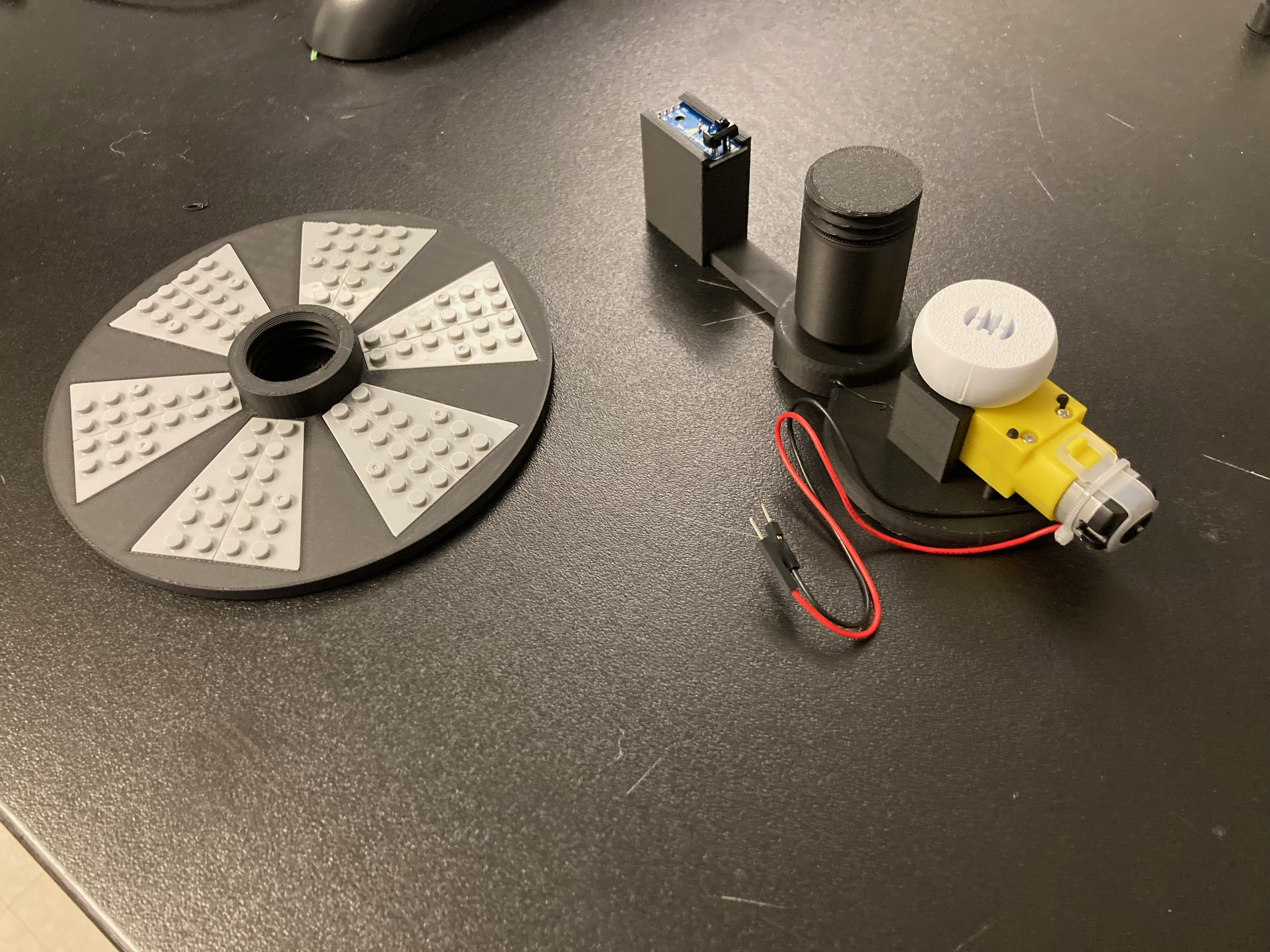
Spin the wheel, peek through the slits, and watch a short 3D animation come to life. Swap LEGO minifigures and scene modules frame-by-frame to try new motions without rebuilding the whole toy.
The Microtrope in motion.
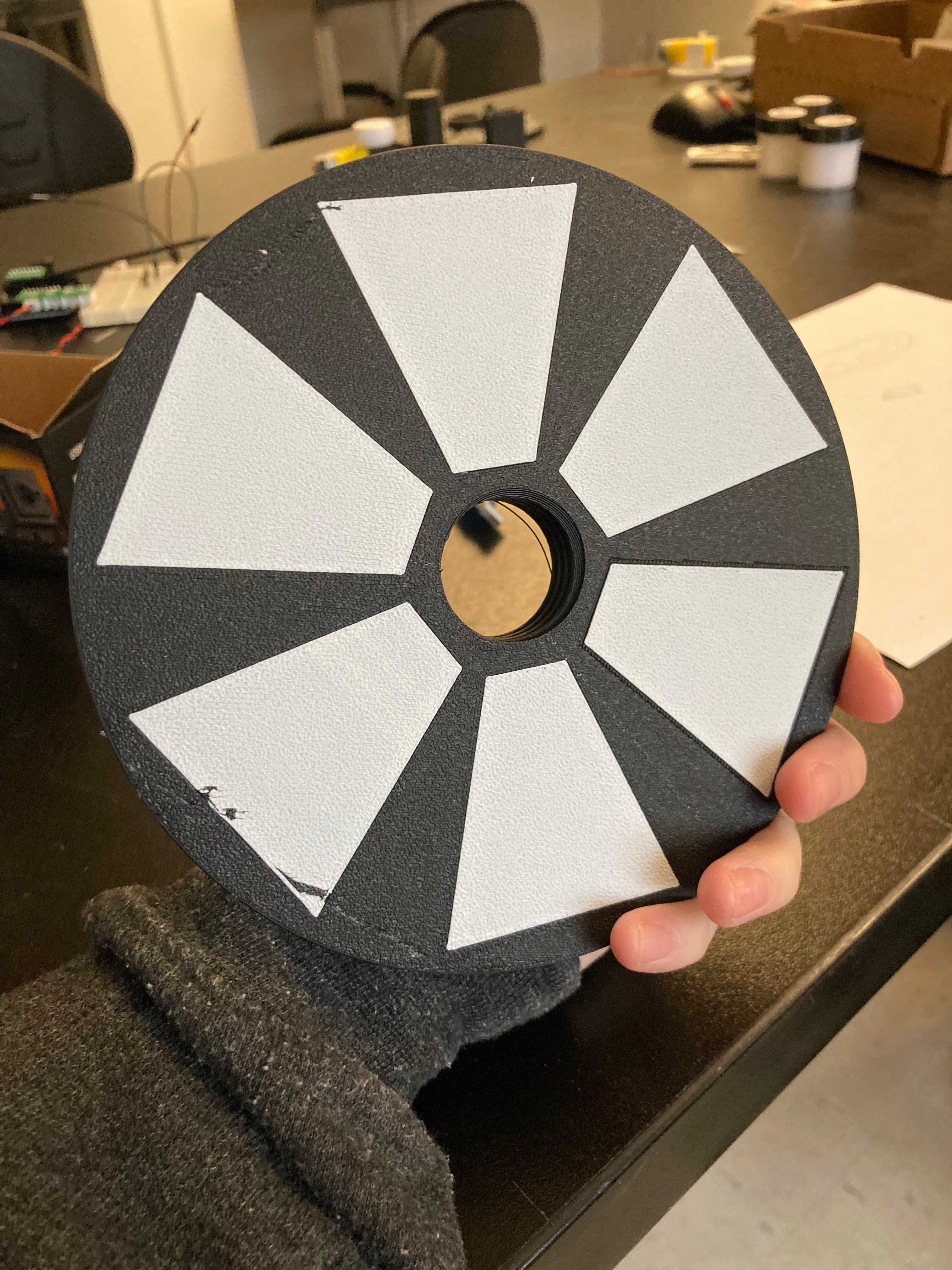
Most zoetropes are fixed — one animation, one wheel, built once. I wanted to know whether a zoetrope could work like a toy system: modular, rebuildable, and easy to iterate on. LEGO bricks were a natural fit for that kind of hands-on prototyping — and at a small enough scale to call it a Microtrope.
With an undergraduate collaborator, I built a small modular zoetrope from LEGO and custom 3D-printed parts:
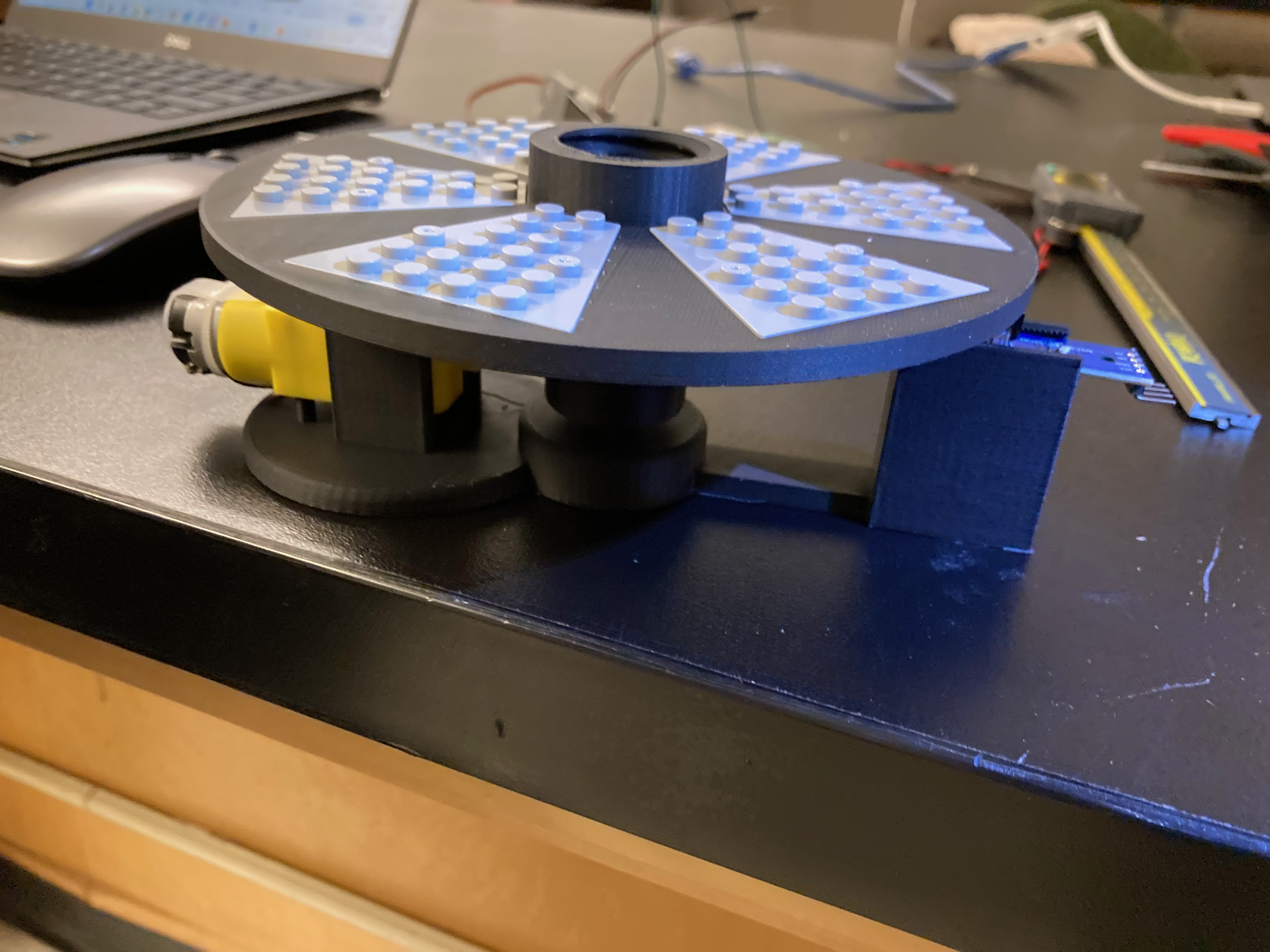
The key insight was modularity: instead of fabricating an entire new zoetrope for every animation, we could swap scenes wedge-by-wedge and reuse the same mechanical platform.
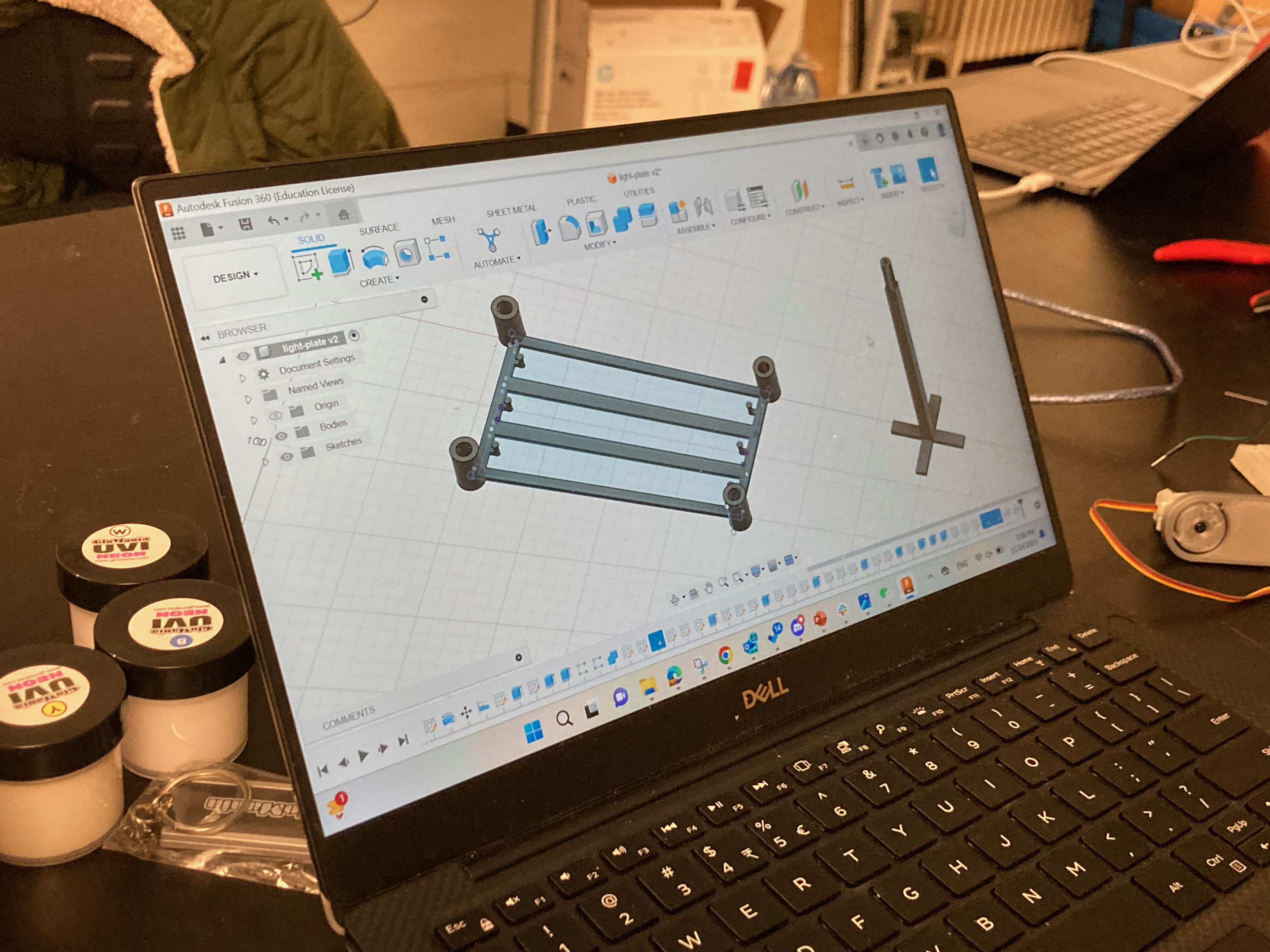
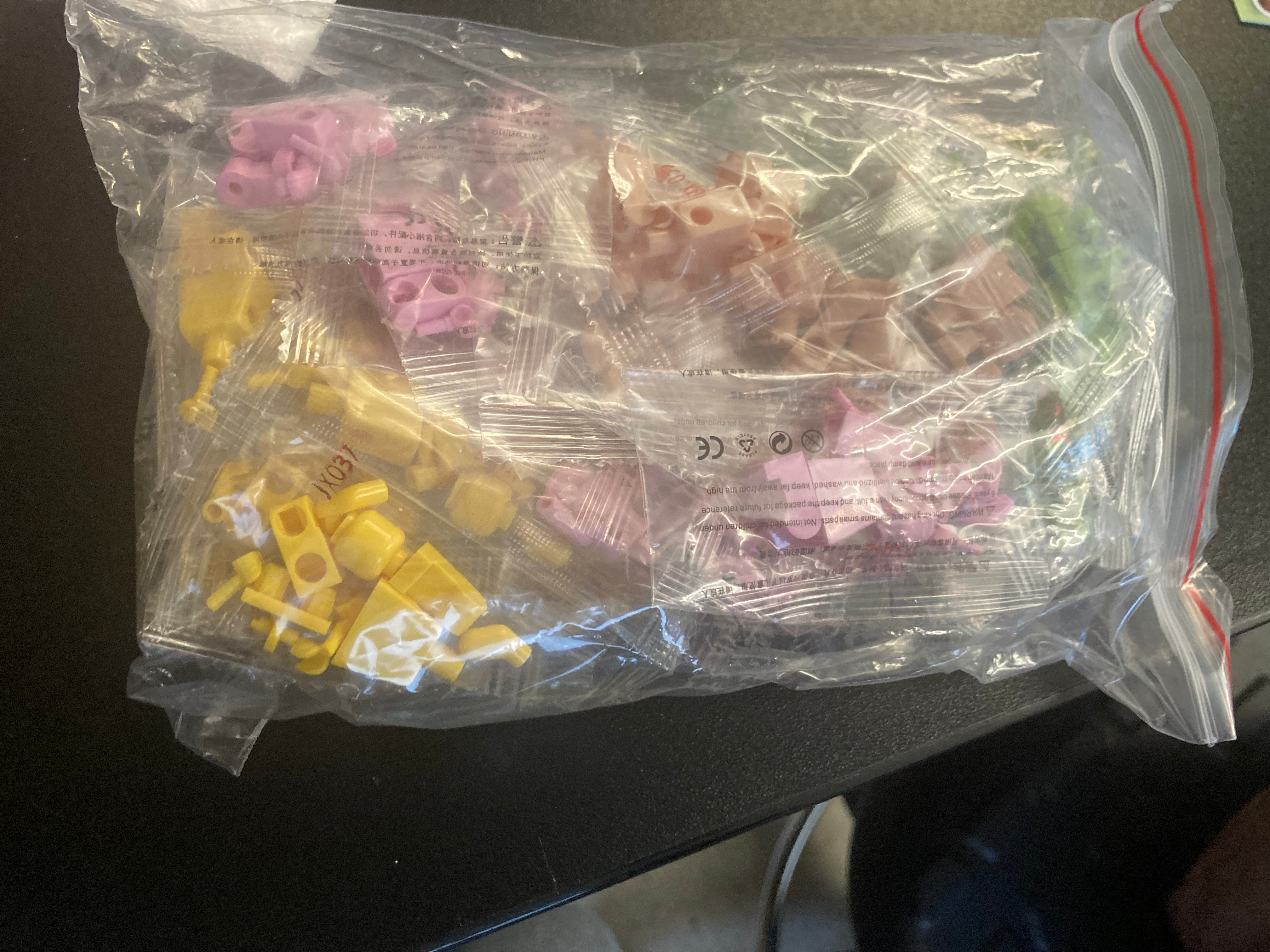
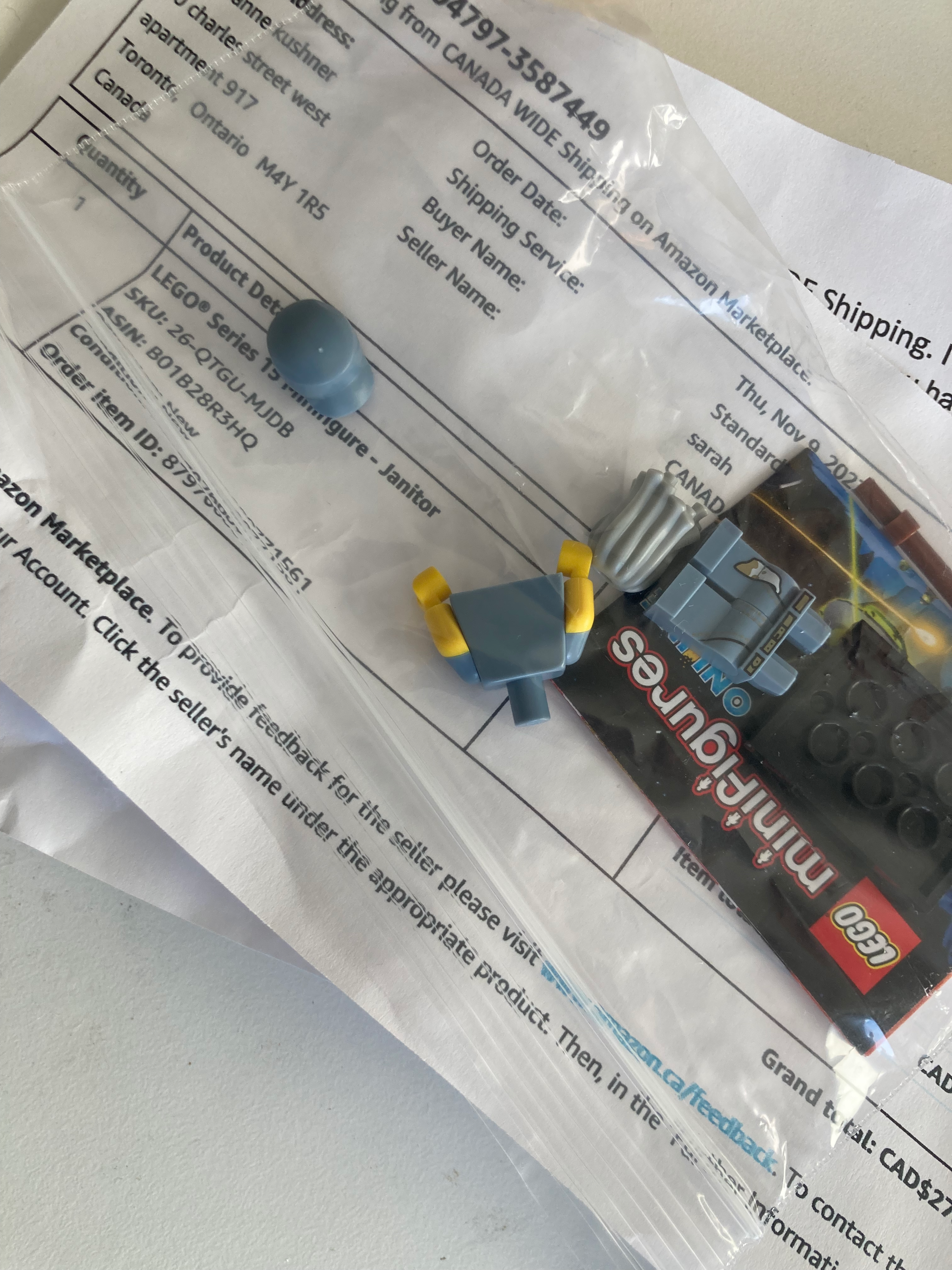
We curated LEGO minifigures and parts to build short looping scenes on each wedge of the disc — mixing off-the-shelf characters with custom poses and props to tell a micro-story across the rotation. Using posable LEGO characters instead of complex 3D-printed scenes allow for non-experts in animation to create their own stories.
This project planted the seed for everything that followed in my PhD. The idea that scene boxes should be swappable — first with LEGO wedges on the Microtrope, later with magnets on a bike wheel — became the core design principle of the Audiotrope.
